Tuesday, December 9, 2014

Charles Addams | Great Artist | Art | Famous

Charles Samuel "Chas" Addams (January 7, 1912 – September 29, 1988) was an American cartoonist known for his darkly humorous and macabre characters. Some of the recurring characters, who became known as The Addams Family, have been the basis for spin-offs in several other forms of media.

Charles Samuel Addams was born in Westfield, New Jersey, the son of Grace M. and Charles Huy Addams, a piano-company executive who had studied to be an architect. He was known as "something of a rascal around the neighborhood" as childhood friends recalled. Addams was distantly related to U.S. presidents John Adams and John Quincy Adams, despite the different spellings of their last names, and was a first cousin twice removed to noted social reformer Jane Addams.

A house on Elm Street, and another on Dudley Avenue that police once caught him breaking into, are said to be the inspiration for the Addams Family mansion in his cartoons. College Hall, the oldest building on the current campus of the University of Pennsylvania, where Addams studied, was also an inspiration for the mansion. He was fond of visiting the Presbyterian Cemetery on Mountain Avenue. One friend said of him: "His sense of humor was a little different from everybody else's." He was also artistically inclined, "drawing with a happy vengeance", according to a biographer.
His father encouraged him to draw, and Addams did cartoons for the Westfield High School student literary magazine, Weathervane. He attended Colgate University in 1929 and 1930, and the University of Pennsylvania, where a fine-arts building on campus was to be named for him, in 1930 and 1931. In front of the building is a sculpture of the silhouettes of Addams Family characters. He then studied at the Grand Central School of Art in New York City in 1931 and 1932.

In 1933, Addams joined the layout department of True Detective magazine, where he had to retouch photos of corpses that appeared in the magazine's stories to remove the blood from them. Addams complained: "A lot of those corpses were more interesting the way they were."

Addams' first drawing, a sketch of a window washer, ran in The New Yorker on February 6, 1932, and his cartoons ran regularly in the magazine from 1938, when he drew the first instance of what came to be called The Addams Family, until his death. He was a freelancer throughout that time.

During World War II, Addams served at the Signal Corps Photographic Center in New York, where he made animated training films for the U.S. Army. In late 1942, he met his first wife, Barbara Jean Day, who purportedly resembled his cartoon character Morticia Addams. The marriage ended eight years later, after Addams, who hated small children, refused to adopt one. She later married New Yorker colleague John Hersey, author of the book Hiroshima.

Addams married his second wife, Barbara Barb (Estelle B. Barb), in 1954. A practicing lawyer, she "combined Morticia-like looks with diabolical legal scheming", by which she wound up controlling " The Addams Family" television and film franchises and persuaded her husband to give away other legal rights. At one point, she got her husband to take out a US $100,000 insurance policy. Addams consulted a lawyer on the sly, who later humorously wrote: "I told him the last time I had word of such a move was in a picture called Double Indemnity starring Barbara Stanwyck, which I called to his attention." In the movie, Stanwyck's character plotted her husband's murder. The couple divorced in 1956.

The Addams Family television series began after David Levy, a television producer, approached Addams with an offer to create it with a little help from the humorist. All Addams had to do was give his characters names and more characteristics for the actors to use in portrayals. The series ran on ABC for two seasons, from 1964 to 1966.

Addams was "sociable and debonair." A biographer described him as being "a well-dressed, courtly man with silvery back-combed hair and a gentle manner, he bore no resemblance to a fiend." Figuratively a ladykiller, Addams accompanied women such as Greta Garbo, Joan Fontaine, and Jacqueline Kennedy on social occasions.

Later, Addams married his third and last wife, Marilyn Matthews Miller, best known as "Tee" (1926–2002), in a pet cemetery. In 1985, the Addamses moved to Sagaponack, New York, where they named their estate "The Swamp".

Addams died on September 29, 1988, at the age of 76, at St. Clare's Hospital and Health Center in New York City, having suffered a heart attack while still in his car after parking it. An ambulance took him from his apartment to the hospital, where he died in the emergency room. As he had requested, a wake was held rather than a funeral; he had wished to be remembered as a "good cartoonist". He was cremated, and his ashes were buried in the pet cemetery of his estate "The Swamp".

Addams' first cartoon was published in New York on January 13, 1940. Addams' cartoons regularly appeared in The New Yorker, and he also created a syndicated comic strip, Out of This World, which ran in 1956. There are many collections of his work, including Drawn and Quartered (1942) and Monster Rally (1950), the latter with a foreword by John O'Hara. Typical of Addams' work, one cartoon shows two men standing in a room labeled "Patent Attorney". One is pointing a bizarre gun out the window toward the street and saying: "Death ray, fiddlesticks! Why, it doesn't even slow them up!"

Dear Dead Days (1959) is not a collection of his cartoons (although it reprints a few from previous collections); it is a scrapbook-like compendium of vintage images (and occasional pieces of text) that appealed to Addams' sense of the grotesque, including Victorian woodcuts, vintage medicine-show advertisements, and a boyhood photograph of Francesco Lentini, who had three legs.[citation needed]

Addams drew more than 1,300 cartoons over the course of his life. Those that did not appear in The New Yorker were often in Collier's and TV Guide. In 1961, Addams received, from the Mystery Writers of America, a Special Edgar Award for his body of work. His cartoons appeared in books, calendars, and other merchandising. Singer-guitarist Dean Gitter's 1957 recording Ghost Ballads, an album of folk songs with supernatural themes, was packaged with cover art by Addams showing a haunted house. The films The Old Dark House (1963) and Murder by Death (1976) feature title sequences illustrated by Addams.

In 1946, Addams met science-fiction writer Ray Bradbury after having drawn an illustration for Mademoiselle magazine's publication of Bradbury's short story "Homecoming", the first in a series of tales chronicling a family of Illinois vampires named the Elliotts. The pair became friends and planned to collaborate on a book of the Elliott Family's complete history with Bradbury writing and Addams providing the illustrations, but it never materialized. Bradbury's stories about the "Elliott Family" were finally anthologized in From the Dust Returned in October 2001, with a connecting narrative and an explanation of his work with Addams, and Addams' 1946 Mademoiselle illustration used for the book's cover jacket. Although Addams' own characters were well-established by the time of their initial encounter, in a 2001 interview, Bradbury stated: "(Addams) went his way and created the Addams Family and I went my own way and created my family in this book."

Janet Maslin, in a review of an Addams biography for The New York Times, wrote: "Addams's persona sounds cooked up for the benefit of feature writers... was at least partly a character contrived for the public eye," noting that one outré publicity photo showed the humorist wearing a suit of armor at home, "but the shelves behind him hold books about painting and antiques, as well as a novel by John Updike."

Filmmaker Alfred Hitchcock was a friend of Addams, and owned two pieces of original Addams art. Hitchcock references Addams in his 1959 film, North by Northwest. During the auction scene, Cary Grant discovers two of his adversaries with someone whom he also thinks is against him and says: "The three of you together. Now that's a picture only Charles Addams could draw."

Source :WikiPedia

Monday, December 8, 2014

Nigar Nazar

Nigar Nazar (born 1953) is the first Pakistani female cartoonist. Her character Gogi is an urban Pakistani woman struggling with her frailties in the context of gender-discriminate social norms. She is the chief executive officer of Gogi Studios. Between 2002 and 2003, she was a Fulbright Professor at the art department of the University of Oregon.

She started her career in 1971, when she switched out of a pre-medical degree to study fine arts. Gogi made her debut in 1971 in Karachi's Institute of Arts and Crafts annual magazine. She graduated with a degree in fine arts from Punjab University, Lahore. She also took several courses from the Australian National University, Canberra.

Nigar studied as a Fulbright Professor at the art department of the University of Oregon in 2002/2003, and as a Fulbright Visiting Specialist at Colorado College in 2009. UNICEF sponsored her visit to Hanna-Barbera Studios in Manila, for a training session on animated films.

She is the chief executive officer of Gogi Studios and an International Art Instructor. She has been drawing cartoons professionally since 1971. Gogi Studios works on projects that actively address social issues. In 2009, Nazar completed five "awareness comics". Three books compiling her cartoons have been published, as well as several calendars, brochures, diaries, and posters.[citation needed] In collaboration with non-governmental organisationss, 12 public-transport buses were wrapped with Gogi cartoons in 2004 to convey social messages. She has produced several books for children on health and hygiene, the environment, disaster management, first aid, and safety, all published and distributed by the government of Pakistan.

Now living in Islamabad, Nazar says "My work ... it came from the newspaper and then it came into the community, on public buses. And from public buses, it went into hospitals. From hospitals, it went into books. And from books it went to comic books. From comic books, I teach programs now."

She a founding member of the Asian Youth Association for Animators and Cartoonists, headquartered in Guiyang, China. She has been an official speaker and jury member of numerous art and cartoon competitions, both international and national such as the APACA (AYAAC), Aydin Dogan Vakfi (Turkey), Himal Cartoon Conference (Nepal), Cartoonists Congress (Malaysia/Singapore), and the Oxfam Congress for Women's Issues (Sri Lanka). Nazar has conducted many workshops and outreach programs to privileged and under privileged students in Pakistan.

 Nazar's main character, Gogi, has been a popular comic-strip character in newspapers worldwide. Gogi is a modern Pakistani Muslim woman with short hair and long eyelashes, usually seen wearing a polka dot–covered dress. Asked in an interview to describe Gogi, Nazar said "In the words of a university student who has done a well-researched thesis on my work, 'Gogi is the symbol of womanhood in Pakistan, with all her adventures and escapades in daily life.'" The Denver Post described Gogi as "a bit like 'Blondie' and a bit like Oprah—except devoutly Muslim".

Nazar painting the portrait Father of the nation, Quaid-e-Azam on National Day celebrations for the Pakistan Embassy in England, 1986. That painting is still present in the Pakistan consulate.

Nigar was featured in the Wateen Telecom Pakistan "Icon 2010 of Pakistan" calendar. The Cartoonists Rights Network named her first among innovative users of cartoons. She received Mohtarma Fatima Jinnah Award from the government of Pakistan. She received the Booruker UNESCO prize in 1997 for her work at an orphanage in Kyrgyzstan.


Source : WikiPedia

Friday, December 5, 2014

cartoonist

Cartoonist
A cartoonist is a visual artist who specializes in drawing cartoons. This work is often created for entertainment, political commentary or advertising. Cartoonists may work in many formats, such as animation, booklets, comic strips, comic books, editorial cartoons, graphic novels, manuals, gag cartoons, graphic design, illustrations, storyboards, posters, shirts, books, advertisements, greeting cards, magazines newspapers or video game packaging.

The English satirist and editorial cartoonist William Hogarth, who emerged In the 18th century, has been credited with pioneering Western sequential art. His work ranged from realistic portraiture to comic strip-like series of pictures called "modern moral subjects". Much of his work poked fun at contemporary politics and customs; illustrations in such style are often referred to as "Hogarthian".

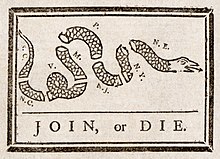
While never a professional cartoonist, Benjamin Franklin is credited with having the first cartoon published in an American newspaper. In the 19th century, professional cartoonists such as Thomas Nast introduced other familiar American political symbols, such as the Republican elephant.

During the 20th century, numerous magazines carried single-panel gag cartoons by such freelance cartoonists as Charles Addams, Irwin Caplan, Chon Day, Clyde Lamb and John Norment. These were almost always published in black and white, although Collier's often carried cartoons in color. The debut of Playboy introduced full-page color cartoons by Jack Cole, Eldon Dedini and others. Single-panel cartoonists syndicated to newspapers included Dave Breger, Hank Ketcham, George Lichty, Fred Neher, Irving Phillips and J. R. Williams.

Comic strips received widespread distribution to mainstream newspapers by syndicates[3] such as the Universal Press Syndicate, United Media or King Features. Sunday strips go to a coloring company such as American Color before they are published.

Some comic strip creators publish in the alternative press or on the Internet. Comic strip artists may also sometimes work in book-length form, creating graphic novels. Both vintage and current strips receive reprints in book collections.

The major comic book publishers (such as Marvel or DC) utilize teams of cartoonists to produce the art (typically separating pencil work, inking and lettering while the color is added digitally by colorists). When a consistent artistic style is wanted among different cartoonists (such as Archie Comics), character model sheets may be used as reference.

Calum MacKenzie, in his preface to the exhibition catalog, The Scottish Cartoonists (Glasgow Print Studio Gallery, 1979) defined the selection criteria:

The difference between a cartoonist and an illustrator was the same as the difference between a comedian and a comedy actor—the former both deliver their own lines and take full responsibility for them, the latter could always hide behind the fact that it was not his entire creation.

Animated cartooning is created for short films, advertising, feature films and television. It is also sometimes used in live-action films for dream sequences or opening titles. An animation artist is commonly referred to as an animator rather than a cartoonist.

There are many books of cartoons in both paperback and hardcover, such as the collections of cartoons from The New Yorker. Prior to the 1960s, cartoons were mostly ignored by museums and art galleries. In 1968, the cartoonist and comedian Roger Price opened the first New York City gallery devoted exclusively to cartoons, mainly work by the leading magazine gag cartoonists. Today, there are several museums devoted to cartoons, notably the Billy Ireland Cartoon Library & Museum, run by curator Jenny E. Robb at Ohio State University.

Comics artists usually sketch a drawing in pencil before going over the drawing in India ink, using either a dip pen or a brush. Artists may also use a lightbox to create the final image in ink. Some artists, Brian Bolland for example, use computer graphics, with the published work as the first physical appearance of the artwork. By many definitions (including McCloud's, above) the definition of comics extends to digital media such as webcomics and the mobile comic.


Benjamin Franklin's "Join, or Die" (1754), credited as the first cartoon published in an American newspaper.

The nature of the comics work being created determines the number of people who work on its creation, with successful comic strips and comic books being produced through a studio system, in which an artist assembles a team of assistants to help create the work. However, works from independent companies, self-publishers or those of a more personal nature can be produced by a single creator.

Within the comic book industry of the United States, the studio system has come to be the main method of creation. Through its use by the industry, the roles have become heavily codified, and the managing of the studio has become the company's responsibility, with an editor discharging the management duties. The editor assembles a number of creators and oversees the work to publication.

Any number of people can assist in the creation of a comic book in this way, from a plotter, a breakdown artist, a penciller, an inker, a scripter, a letterer and a colorist, with some roles being performed by the same person.

In contrast, a comic strip tends to be the work of a sole creator, usually termed a cartoonist. However, it is not unusual for a cartoonist to employ the studio method, particularly when a strip become successful. Mort Walker employed a studio, while Bill Watterson eschewed the studio method, preferring to create the strip himself. Gag, political and editorial cartoonists tend to work alone as well, though a cartoonist may use assistants.

While almost all comics art is in some sense abbreviated, and also while every artist who has produced comics work brings their own individual approach to bear, some broader art styles have been identified. Comic strip artists Cliff Sterrett, Frank King and Gus Arriola often used unusual, colorful backgrounds, sometimes veering into abstract art.

The basic styles have been identified as realistic and cartoony, with a huge middle ground for which R. Fiore has coined the phrase liberal. Fiore has also expressed distaste with the terms realistic and cartoony, preferring the terms literal and freestyle, respectively.

Scott McCloud has created "The Big Triangle" as a tool for thinking about comics art. He places the realistic representation in the bottom left corner, with iconic representation, or cartoony art, in the bottom right, and a third identifier, abstraction of image, at the apex of the triangle. This allows placement and grouping of artists by triangulation.
The cartoony style uses comic effects and a variation of line widths for expression. Characters tend to have rounded, simplified anatomy. Noted exponents of this style are Carl Barks and Jeff Smith.
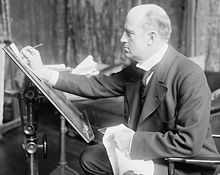
 Harles Dana Gibson was an influential American cartoonist in the early 20th century.

The realistic style, also referred to as the adventure style is the one developed for use within the adventure strips of the 1930s. They required a less cartoony look, focusing more on realistic anatomy and shapes, and used the illustrations found in pulp magazines as a basis. This style became the basis of the superhero comic book style, since Joe Shuster and Jerry Siegel originally worked Superman up for publication as an adventure strip.

McCloud also notes that in several traditions, there is a tendency to have the main characters drawn rather simplistic and cartoony, while the backgrounds and environment are depicted realistically. Thus, he argues, the reader easily identifies with the characters, (as they are similar to one's idea of self), whilst being immersed into a world, that's three-dimensional and textured. Good examples of this phenomenon include Hergé's The Adventures of Tintin (in his "personal trademark" Ligne claire style), Will Eisner's Spirit and Osamu Tezuka's Buddha, among many others.
Tools

Source : WikiPedia

Thursday, December 4, 2014

Cartoon History


A cartoon is a form of two-dimensional illustrated visual art. While the specific definition has changed over time, modern usage refers to a typically non-realistic or semi-realistic drawing or painting intended for satire, caricature, or humor, or to the artistic style of such works. An artist who creates cartoons is called a cartoonist.

The term originated in the Middle Ages and first described a preparatory drawing for a piece of art, such as a painting, fresco, tapestry, or stained glass window. In the 19th century, it came to refer to humorous illustrations in magazines and newspapers, and in the early 20th century and onward it referred to comic strips and animated films.

A cartoon (from the Italian "cartone" and Dutch word "karton", meaning strong, heavy paper or pasteboard) is a full-size drawing made on sturdy paper as a study or modello for a painting, stained glass or tapestry. Cartoons were typically used in the production of frescoes, to accurately link the component parts of the composition when painted on damp plaster over a series of days (giornate).

Such cartoons often have pinpricks along the outlines of the design; a bag of soot was then patted or "pounced" over the cartoon, held against the wall to leave black dots on the plaster ("pouncing"). Cartoons by painters, such as the Raphael Cartoons in London and examples by Leonardo da Vinci, are highly prized in their own right. Tapestry cartoons, usually coloured, were followed by eye by the weavers on the loom.

In modern print media, a cartoon is a piece of art, usually humorous in intent. This usage dates from 1843 when Punch magazine applied the term to satirical drawings in its pages,particularly sketches by John Leech. The first of these parodied the preparatory cartoons for grand historical frescoes in the then-new Palace of Westminster. The original title for these drawings was Mr Punch's face is the letter Q and the new title "cartoon" was intended to be ironic, a reference to the self-aggrandizing posturing of Westminster politicians.

Modern single-panel gag cartoons, found in magazines, generally consist of a single drawing with a typeset caption positioned beneath or (much less often) a speech balloon. Newspaper syndicates have also distributed single-panel gag cartoons by Mel Calman, Bill Holman, Gary Larson, George Lichty, Fred Neher and others. Many consider New Yorker cartoonist Peter Arno the father of the modern gag cartoon (as did Arno himself). The roster of magazine gag cartoonists includes Charles Addams, Charles Barsotti and Chon Day.

Bill Hoest, Jerry Marcus and Virgil Partch began as a magazine gag cartoonists and moved on to do syndicated comic strips. Noteworthy in the area of newspaper cartoon illustration is Richard Thompson, who illustrated numerous feature articles in The Washington Post before creating his Cul de Sac comic strip. Sports sections of newspapers usually featured cartoons, sometimes including syndicated features such as Chester "Chet" Brown's All in Sport.

Editorial cartoons are found almost exclusively in news publications and news websites. Although they also employ humor, they are more serious in tone, commonly using irony or satire. The art usually acts as a visual metaphor to illustrate a point of view on current social and/or political topics. Editorial cartoons often include speech balloons and, sometimes, multiple panels. Editorial cartoonists of note include Herblock, David Low, Jeff MacNelly, Mike Peters and Gerald Scarfe.

Comic strips, also known as "cartoon strips" in the United Kingdom, are found daily in newspapers worldwide, and are usually a short series of cartoon illustrations in sequence. In the United States they are not as commonly called "cartoons" themselves, but rather "comics" or "funnies". Nonetheless, the creators of comic strips—as well as comic books and graphic novels—are usually referred to as "cartoonists". Although humor is the most prevalent subject matter, adventure and drama are also represented in this medium. Noteworthy cartoonists of humor strips include Scott Adams, Steve Bell, Charles Schulz, E. C. Segar, Mort Walker and Bill Watterson.

By the mid 19th century, major political newspapers in many countries featured cartoons commenting on the politics of the day. Thomas Nast in New York City brought realistic German drawing techniques to enliven American cartooning. his 160 cartoons relentlessly pursued the criminal characteristic of the Tweed machine in New York City, and help bring it down. Indeed, Tweed was arrested in Spain, when police identified him from Nast's cartoons. Sir John Tenniel was the toast of London.

Political cartoons can be humorous or satirical, sometimes with piercing effect. The target may complain, but he can seldom fight back. Lawsuits have been very rare. the first successful lawsuit against the cartoonist in over a century in Britain came in 1921 when J.H. Thomas, the leader of the National Union of Railwaymen (NUR), initiated libel proceedings against the magazine of the British Communist Party. Thomas claimed defamation in the form of cartoons and words depicting the events of "Black Friday"—when he allegedly betrayed the locked-out Miners' Federation. To Thomas, the framing of his image by the far left threatened to grievously degrade his character In the popular imagination. Soviet inspired Communism was a new element in European politics, and cartoonists unrestrained by tradition tested the boundaries of libel law. Thomas won his lawsuit, and restore his reputation.

Also in the world of science, mathematics and technology cartoons have found their place. One well-known cartoonist in the USA is Sidney Harris.Many of Gary Larson's cartoons had a scientific flavor.

Books with cartoons are usually reprints of newspaper cartoons. On some occasions, new gag cartoons have been created for book publication, as was the case with Think Small, a 1967 promotional book distributed as a giveaway by Volkswagen dealers. Bill Hoest and other cartoonists of that decade drew cartoons showing Volkswagens, and these were published along with humorous automotive essays by such humorists as H. Allen Smith, Roger Price and Jean Shepherd. The book's design juxtaposed each cartoon alongside a photograph of the cartoon's creator.

Because of the stylistic similarities between comic strips and early animated movies, "cartoon" came to refer to animation, and the word "cartoon" is currently used to refer to both animated cartoons and gag cartoons. While "animation" designates any style of illustrated images seen in rapid succession to give the impression of movement, the word "cartoon" is most often used in reference to TV programs and short films for children featuring anthropomorphized animals, superheroes, the adventures of child protagonists and related genres.
At the end of the 1980s, the word "cartoon" was shortened, and the word "toon" came into usage with the live action/animated feature Who Framed Roger Rabbit (1988), followed two years later by the TV series Tiny Toon Adventures (1990).


Source : WikiPedia